
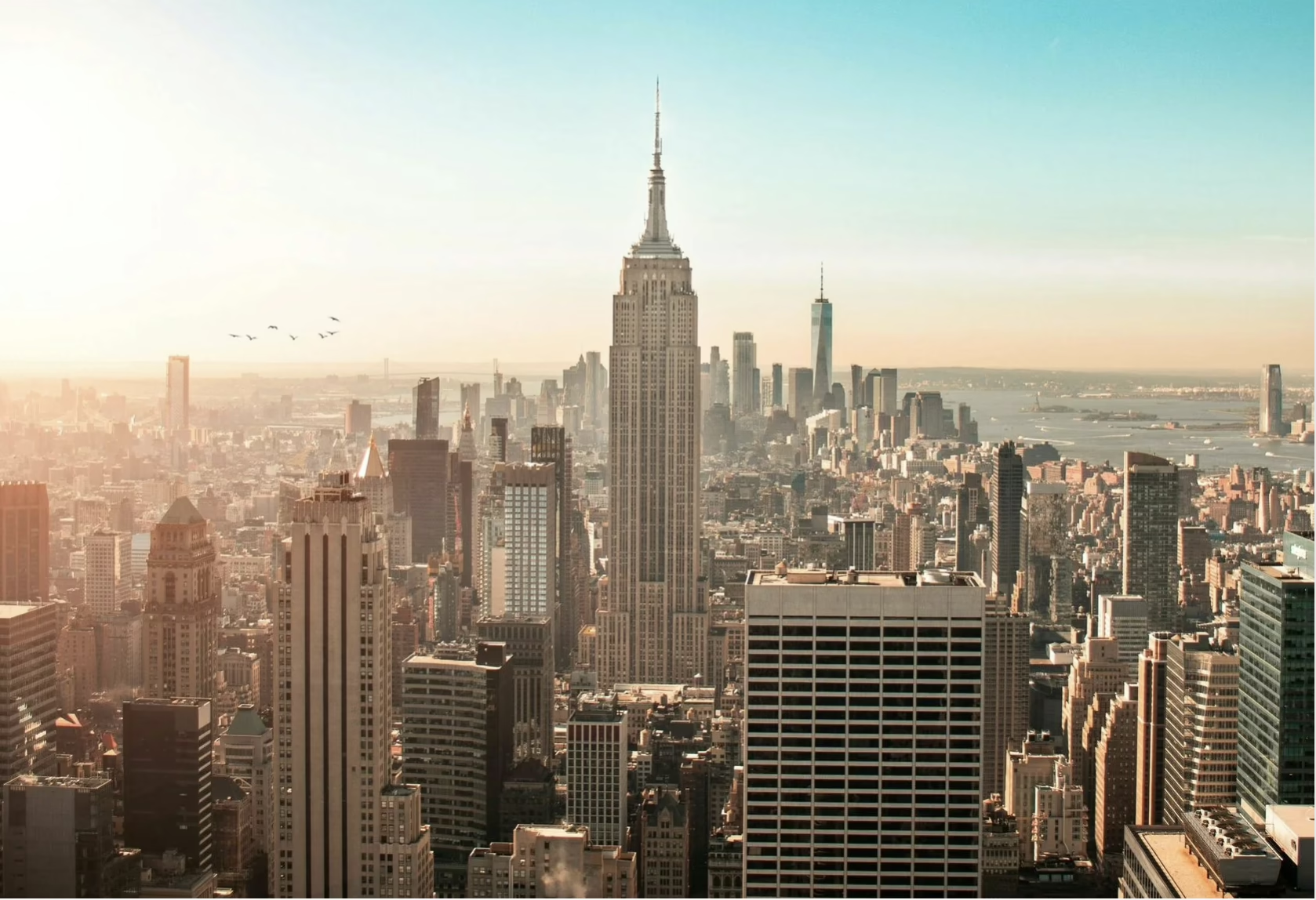
Along the Atlantic seaboard, cities gather in layers rather than in single gestures. Brick rows lean toward narrow pavements. Towers rise in the distance without erasing what sits below them. The coastline remains nearby, even when not visible — air shifting slightly, light carrying a faint brightness that feels maritime.
In Boston, Beacon Hill climbs gently. Streets curve in ways that seem almost accidental. Windows align in quiet repetition. The scale feels contained, but not small. Footsteps soften against brick-lined paths. Lamplight lingers into early evening without urgency.
Nothing demands attention. It simply remains.

Where Brick Holds the Afternoon
Beacon Hill does not unfold dramatically. It narrows, then bends, revealing fragments of staircase, garden railing, polished door knocker. The air feels still in pockets, though traffic hums somewhere beyond the slope.
Further south along the corridor, movement extends through lines such as the train from Boston to New York City, where shoreline appears briefly and then retreats behind wooded stretches and industrial edges. The shift feels incremental rather than decisive.
In Beacon Hill, repetition defines the atmosphere — façade after façade, stair after stair. Light rests unevenly across brick, deepening shadow in small intervals.

Screens That Refuse Stillness
Times Square behaves differently, though not as abruptly as expected. The brightness gathers rather than explodes. Screens layer themselves over façades in vertical bands. Colour shifts continuously without settling into one tone.
Journeys threading the eastern corridor often trace routes like the train from DC to NYC, where river crossings and low towns surface and dissolve in steady sequence. Even then, the adjustment feels gradual.
In Times Square, movement circulates rather than advances. Crowds cluster, disperse, then cluster again. Sound layers — announcement, music, conversation — without a single centre.

Between Brownstone and Billboard
Beacon Hill compresses perspective inward. Times Square disperses it outward. One gathers quiet into narrow streets. The other gathers light into open intersection.
Yet both rely on repetition — window after window, screen after screen. The cadence persists without escalation.
Neither space insists on spectacle. Each holds its rhythm beneath shifting light.
The Line That Threads the Coast
Later, recollection blurs brick stair with illuminated façade. A lamplit doorway aligns faintly with a vertical screen. Rail journeys between them fade into steady horizontal passage beneath broad Atlantic sky.
What remains is not division between calm and energy, north and south, but continuity of structure meeting motion. Brick absorbing evening light. Glass reflecting it.
And somewhere along that eastern line, the movement continues quietly — not resolved into contrast — simply unfolding beside a coastline that remains near, whether seen or not.
Where Evening Adjusts the Tone
In Beacon Hill, dusk arrives softly, turning brick from warm red to deeper brown, lamplight spreading in small halos along narrow streets. In Times Square, evening feels less like arrival and more like extension — screens brightening without sharp transition, colours intensifying but not overwhelming. The change happens gradually in both places, as if light is recalibrating rather than switching.
Shadows lengthen differently. On the hill, they settle into stairwells and beneath iron railings. In the square, they dissolve under constant glow. Neither fully darkens.
The Corridor That Carries Both
Between Boston and New York runs a stretch of track and shoreline that rarely insists on definition. Marshland appears briefly. Industrial edges surface and fall away. Platforms pass in measured intervals. The sky remains broad enough to hold brownstone and billboard alike.
Over time, the memory of quiet slope and illuminated intersection overlaps — brick catching lamplight, glass catching reflection. The differences soften into rhythm rather than contrast. And somewhere along that Atlantic corridor, the motion continues quietly, carried forward beneath the same shifting coastal sky.