Think phone safety. Whether it’s a jealous ex or a scammer halfway across the globe, nobody should be able to watch what you do on your phone without your knowledge. Arqam Zafar, Marketing Director at AstrillVPN, says most people have no idea how easy it has become for someone else to gain access to their device, and the warning signs are not always what you would expect.
How can I tell if someone is snooping on my phone?
A phone that gets warm while it sits in your pocket, or burns through battery life for no clear reason, is one of the first signs that something has been planted on it. You might also spot alerts that seem entirely out of place, or find the device is sluggish when it powers on or off.
These are the things people tend to dismiss as a glitch or an old battery, but taken together they can point to something running in the background that should not be there.
A sudden spike in mobile data is worth paying attention to as well. Spyware has to send everything it hoovers up back to whoever planted it, and that extra traffic will quietly eat into your data allowance.
Can someone install spyware without physically touching my phone?
Spend a few minutes on Google and you will find no shortage of scammers claiming they can crack open someone’s phone with nothing more than a number, usually for a few hundred pounds paid in crypto. Most of these are scams, but there are genuine threats too.
A well-crafted text message with a suspect link is all it takes in some cases. The more sophisticated tools are designed to run silently in the background and they can be difficult to spot, but you can catch them if you know what to look for.
I think my phone safety has been compromised. Now what?
Spyware will very often disguise itself, hiding its icon from your home screen entirely, but it might still show up in the full apps list under an innocuous name that you do not recognise.
Have a proper dig through your installed apps and look for anything you did not put there yourself. If something looks odd, search for its name online. Nine times out of ten you will find other people flagging the exact same app.
For extra peace of mind, you can enlist the help of a reputable mobile security app, which will scan for known threats and flag anything unusual. If all else fails, it’s recommended to do a full factory reset, changing every password you can think of, and switching on two-step verification across the board.
What is the best way to stop it happening in the first place?
It is the boring stuff that saves you, frankly: a decent passcode, a fingerprint or face lock, and a bit of common sense about who picks up your phone when you leave the room. Think phone safety
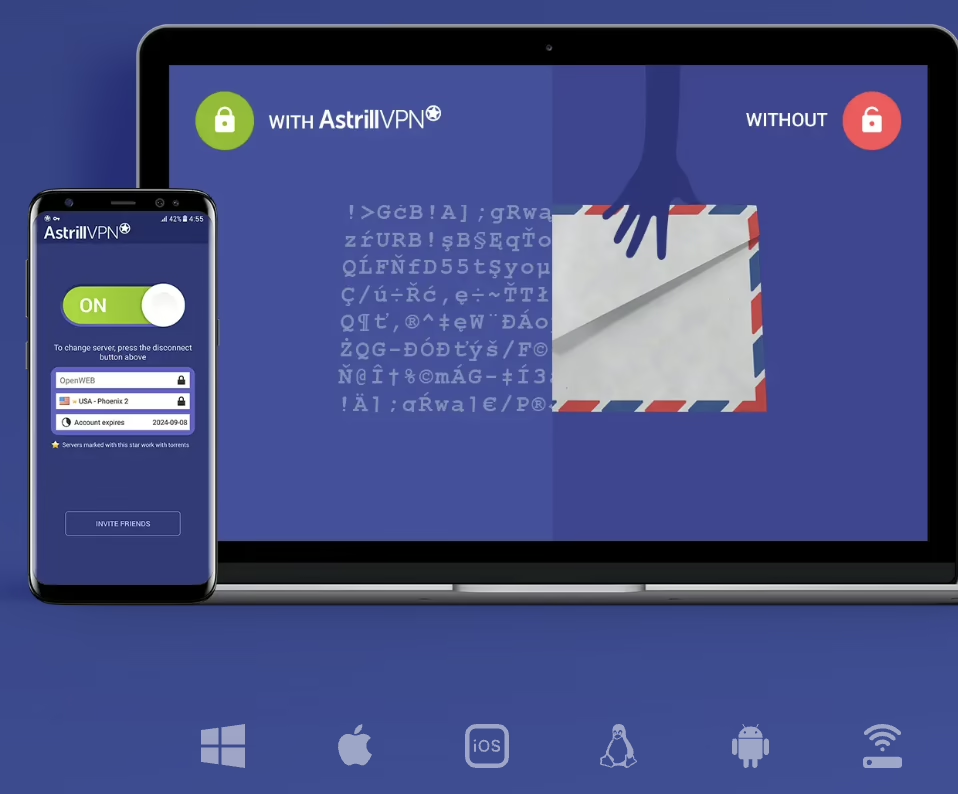
People leave their phones unlocked on restaurant tables, on desks, in bags, all the time. It takes a couple of minutes, that is all. A VPN is another layer worth adding because it encrypts your traffic, particularly on public Wi-Fi, and makes it far harder for anyone to snoop on what you are doing online.