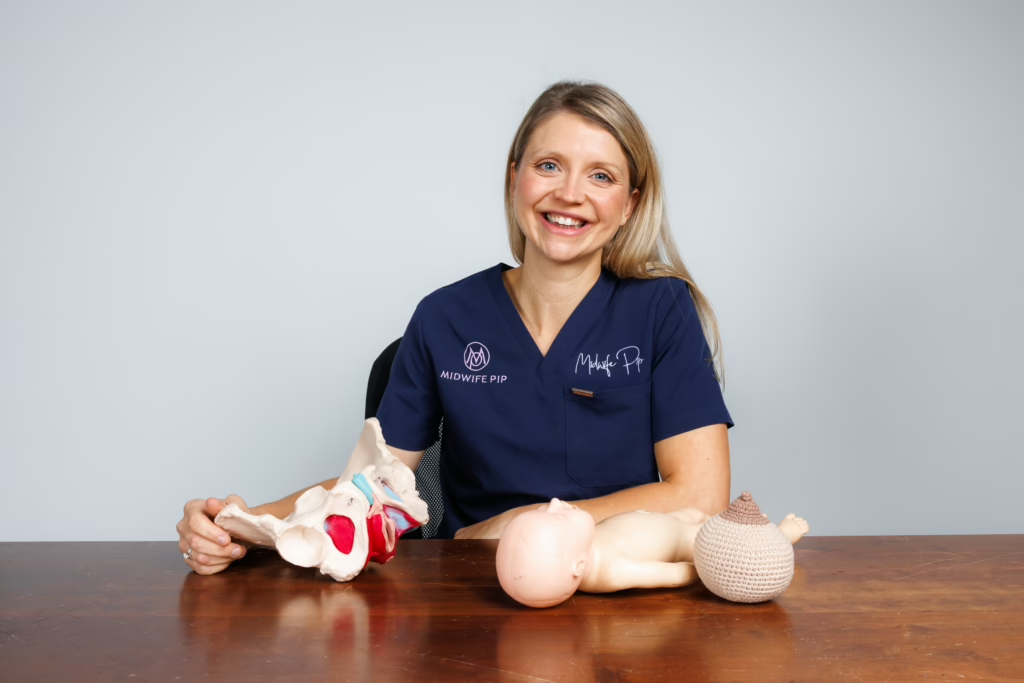
Credit: Written by Midwife Pip, practicing NHS Midwifery Sister, MSc, author, founder of the Midwife Pip Podcast and expert speaker at The Baby Show which returns to NEC Birmingham from 8th-10th May. To find out more, visit
The first six weeks with a new baby are often described as a blur, and for good reason. This period, sometimes called the fourth trimester, is a time of rapid adjustment for both baby and parents. Understanding what is normal can be incredibly reassuring and can help you feel more confident in your new role.
How your baby develops in the first six weeks
Newborns are born neurologically immature, which is why they rely so heavily on you. In these early weeks, your baby is adapting to life outside the womb.
Sleep dominates. Newborns typically sleep between fourteen and seventeen hours a day, but in short stretches. Day and night confusion is very common, and it takes time for their internal clock to develop.
Feeding is frequent and often unpredictable. Whether breastfed or formula fed, babies feed little and often because their stomachs are small. Cluster feeding, where your baby feeds very frequently over a few hours, is normal and often coincides with growth spurts.
You will also start to notice early communication. Your baby will recognise your voice, seek eye contact, and may begin to show their first social smiles by around six weeks.
An important insight for many parents is that crying is your baby’s primary way of communicating. It does not always mean something is wrong. Sometimes it simply means they need comfort or closeness.
What to look out for
While much of newborn behaviour can feel intense, most of it is completely normal. However, there are a few things to be aware of.
Jaundice, which causes yellowing of the skin and eyes, is common in newborns. It is usually mild but should always be monitored.
Weight loss in the first few days is expected, but your baby should begin to regain weight by around day five and return to birth weight by two weeks.
Pay attention to feeding patterns and output. Regular wet and dirty nappies are a reassuring sign that your baby is feeding well.
Trust your instincts. If something does not feel right, it is always appropriate to seek advice.
Must haves for the early weeks
There is a huge market for baby products, but the essentials are actually quite simple.
A safe place for your baby to sleep is the top priority. This could be a crib or Moses basket in your room, following safe sleep guidelines.
Feeding support is invaluable. This might include a comfortable chair, breast pads, bottles, or access to a lactation consultant or midwife.
Nappies, wipes, and a simple system for changing are all you truly need. Fancy equipment is optional.
Clothing should be practical and easy to change. Newborns do not need large wardrobes.
One of the most overlooked must haves is support for you. This could be help from family, friends, or professional services. Rest, nourishment, and emotional support are just as important as anything you buy.
The biggest shift in understanding
Many new parents expect to “get into a routine” quickly, but the reality is that the first six weeks are about responding, not structuring.
Your baby is not trying to be difficult. They are adjusting to a completely new world, and you are their anchor.
If there is one thing to hold onto, it is this: you do not need to be perfect. You need to be responsive, present, and kind to yourself as you learn.
That is what truly supports your baby’s development in these early weeks.
Pip an experienced practicing NHS Midwifery Sister, MSc, author of Midwife Pip’s Guide to a Positive Birth, KGH hypnobirthing diploma, founder of the Midwife Pip Podcast, pelvic health specialist, pre and postnatal trainer and, importantly, a mum. Pip is an enthusiast of all things womens health and wellness. Having worked with many families, for many years Pip see’s every day the void in high quality information available. Pip is on a mission to change this and to make sure that all women can access the information they deserve and need to be empowered and supported through their pregnancy, birth and postpartum journeys.
Instagram: @midwife_pip
Podcast: Midwife Pip Podcast
Book: www.midwifepip.com/midwife-pip-books
Courses: midwifepip.com