Two thirds of UK parents (66%) say shared storytelling has revealed a side of their child’s imagination they never knew existed, according to new research from Kinder Chocolate’s Imagination Index. The study, which surveyed 2,000 UK parents of children aged 3 to 9, looked at how children’s imaginations develop and how co-creating stories can strengthen the bond between parent and child.
The research found that letting children take the lead in a story, rather than simply listening to one, opens up a different kind of conversation at home. Almost half of parents (44%) said they are more likely to discover their child’s hopes and feelings through a story than through a direct chat, and 41% said storytelling helps their child open up about feelings they might not otherwise share.
How children’s imaginations change with age
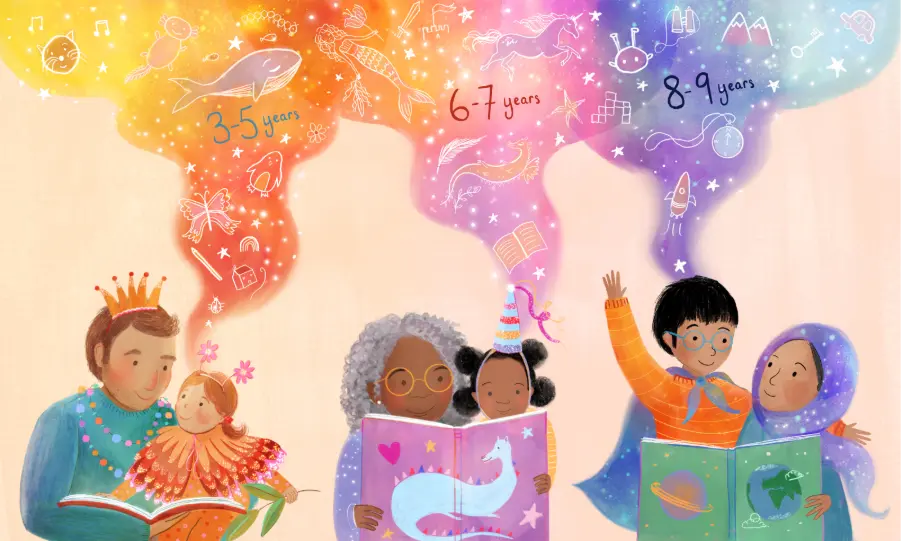
The Imagination Index maps a clear developmental arc in children’s storytelling preferences. Nearly half of parents (49%) say the biggest shift happens between the ages of 3 and 5, when children are drawn to animals and playful characters, with 36% favouring creature-led stories.
By age 6 to 7, fantasy (26%) and adventure (24%) take over, and children start wanting more ownership of the story, with 14% already choosing stories they helped create themselves. By age 8 to 9, that appetite for shaping their own narrative has nearly doubled since the early years, rising to 17%, alongside a growing love of mysteries (27%) and more complex plots.
You don’t need a special occasion, or a big budget
The research also highlights how little is needed to spark a great story. More than half of parents (56%) say their child has turned a cardboard box into a story, and three quarters (76%) say their child is more engaged when co-creating a story than when simply being read one. Storytelling has also moved well beyond bedtime, with parents using it for learning (44%), imaginative play (43%) and even during car journeys (36%).
Dr Elizabeth Kilbey, child and family clinical psychologist and member of Kinder’s Value of Play panel, said co-created storytelling works as a kind of emotional rehearsal for children. “When children have the freedom to shape a story, something really important happens. They’re not just consuming a narrative, they’re expressing how they see the world, testing ideas, and processing emotions that might be difficult to put into words,” she explained.
Illustrator Gillian Eilidh O’Mara, who created artwork bringing the research to life, has spent fourteen years working with families on storytelling projects. She said watching children take the lead in a story shows adults “a magical world we may have forgotten about.”
The research was commissioned alongside Let’s Story, a storytelling feature within the free Applaydu app from Kinder. Designed for children aged 3 to 9, it lets children shape their own characters, settings and story outcomes, with no ads or product branding involved. The app is free to download, with no in-app purchases required.