“Can I have a snack?” It may be one of the most familiar questions for parents as children settle back into school routines, with new research revealing just how frequently children ask for snacks – and the challenges parents face when trying to make healthier choices.
Research from snack brand Imaginakery, published in its Great British Snacking Crisis report, found that children make an average of 3.9 snack requests a day – equivalent to around 168 requests per child over the six-week summer holiday.
But with the school holidays now coming to an end, the return to school brings a different kind of snacking challenge, as parents juggle breakfast, packed lunches, after-school activities and hungry children arriving home from the school day.
The research highlights just how difficult it can be for families to strike the right balance between convenience and nutrition.
Parents admit giving in to snack requests
According to the research:
- 28% of parents say snack requests are most likely to happen just before meals
- 17% say their children ask for snacks at bedtime
- 79% have given their child a sweet treat for breakfast
- 21% have used snacks as a bargaining tool
- 81% want to see more lower-sugar snack options
- 11% of parents don’t understand the traffic-light food labelling system
- 25% don’t know the recommended daily sugar limit for children
There is also a rather amusing side to children’s love of snacks, with youngsters admitting to hiding them in some very creative places – including under pillows (27%), in pockets (27%), behind sofa cushions (22%) and even inside toys (15%).
Biscuits, chocolate and crisps top the list
The research found that some of the nation’s favourite children’s snacks remain firmly in the treat category.
The most frequently eaten snacks were:
- Biscuits – 69%
- Chocolate – 59%
- Crisps – 57%
- Fresh fruit – 57%
- Yoghurts – 55%
- Sweets – 48%
- Cake – 39%
- Cheese – 33%
- Toast – 29%
- Baked goods – 28%
With families facing busy school mornings and after-school schedules, convenience can understandably play a big part in what ends up in a child’s lunchbox or snack box.
Yet parents appear keen to make healthier choices where they can. Almost two-thirds (63%) say they would happily switch to healthier alternatives if suitable options were available, while 81% want to see more lower-sugar snacks on supermarket shelves.
Expert tips for healthier school-time snacking
Imaginakery nutritionist Dr Emma Derbyshire has shared her tips for helping families develop healthier snacking habits as children head back to school.
Make snacktime interactive
Children are naturally inquisitive, so give them the opportunity to get involved with preparing their snacks. Washing, peeling or chopping fruit and vegetables can encourage children to take an interest in what they are eating.
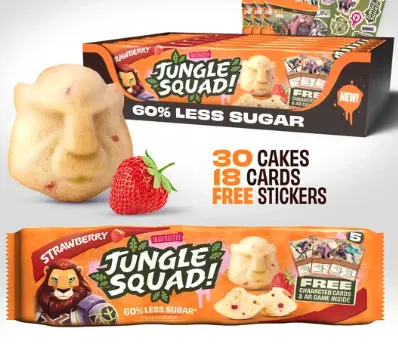
You could also make snacktime more engaging with educational activities. For example, Jungle Squad combines a snack with an educational card game.
Make healthier snacks easy to see
Children are more likely to reach for foods that are readily available, so keep healthier choices visible and accessible.
Try placing fruit where children can see it, or keeping prepared vegetables and other healthier snacks at eye level in the fridge or cupboard. Less healthy treats can be kept out of sight rather than becoming the obvious choice.
Avoid calling foods ‘good’ or ‘bad’
Dr Derbyshire recommends avoiding language that labels foods as simply ‘good’ or ‘bad’.
Instead, parents can talk to children about how different foods help fuel their bodies. This can help children understand nutrition while encouraging a healthy relationship with food.
Set a good example
Children naturally copy what their parents do, so one of the simplest ways to encourage healthier snacking is to make those choices yourself.
Sit down and enjoy healthy snacks together rather than making it something that only applies to children.
Plan ahead for busy school days
When everyone is rushing out of the door in the morning or heading straight from school to clubs and activities, convenience is often the deciding factor.
Having healthier snacks prepared and ready to grab can make it easier to avoid reaching for less nutritious alternatives. Pre-prepared fruit and vegetables, yoghurt or healthier versions of traditional treats can all help.
A healthier approach to the school snack box
The findings form part of The Great British Snacking Crisis, a report from Imaginakery examining children’s snacking habits and the pressures parents face.
Imaginakery founder and CEO Mark Simester said: “For many families, snacks have become part of the daily routine, especially during the school holidays when children are at home all day. Parents want healthier choices, but too often they’re left compromising between convenience and nutrition.”
The report accompanies the launch of Imaginakery’s first product, Jungle Squad, which is designed as a lower-sugar alternative for lunchboxes and snack times.
Jungle Squad is available in select Tesco stores and on Ocado, currently at a promotional price of £1.25 for a pack of five cake bars. It comes in lemon and strawberry flavours, with an RRP of £1.90.
Parents can find out more about Jungle Squad here.
The full Great British Snacking Crisis report is available to download here.