Parents are being urged to think carefully before buying baby products marketed as ‘must-haves’, with some potentially increasing the risks of suffocation, choking and overheating.
Preparing for a new baby can be an expensive time for families, with parents faced with a seemingly endless list of products designed to make life with a newborn easier.
But the Royal Society for the Prevention of Accidents (RoSPA) is warning that some products marketed as essential for feeding or sleep may not be necessary – and could potentially put babies at risk.
The charity has highlighted a number of products that parents should be particularly cautious about, including self-feeding cushions, baby sleep positioners and sleep aids designed to be placed inside a cot.
Self-feeding cushions
Sometimes sold as ‘hands-free baby bottle holders’, ‘hands-free baby feeding bottles’ or ‘adjustable baby bottle holders’, these products are designed to hold a bottle while a baby feeds.
However, RoSPA warns that using such products can make it harder for babies to control the flow of milk, potentially increasing the risk of choking.
The charity advises that babies should always be supervised by an adult while feeding.
Baby sleep positioners
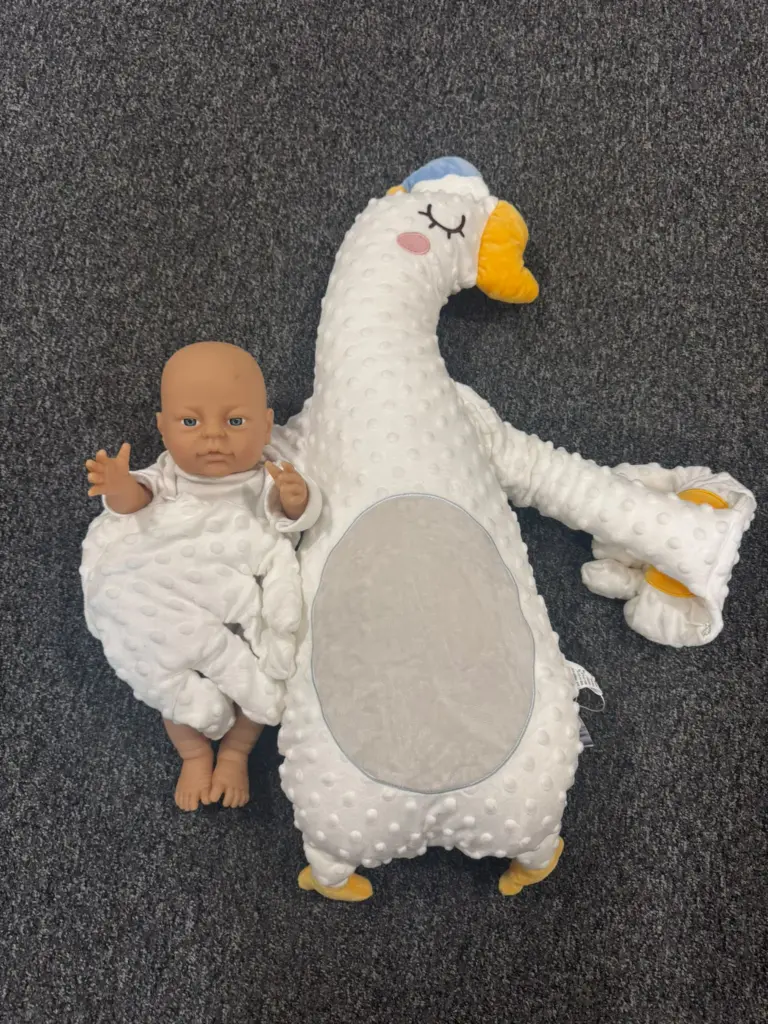
Sleep positioners can be marketed under a variety of names, including baby pillows, cuddle cushions, hug cushions, ergonomic pillows and anti-roll pillows.
They are designed to keep a baby in a particular position while sleeping.
However, restricting a baby’s movement and adding extra items to their sleep environment can increase the risk of suffocation.
In-cot sleep aids
Products such as ‘sleep aid pillows’ may be marketed as a way of helping babies settle or feel comforted while sleeping.
But RoSPA warns that placing additional products in a baby’s sleep space can increase the risks of suffocation and overheating.
Some of these products are widely available online and may not always come with clear safety information or instructions highlighting potential dangers.
RoSPA is also urging parents to check products carefully before buying them. CE or UKCA markings should be looked for where appropriate, while parents should be cautious about products that don’t clearly explain how they have been assessed for safety.
Some baby products have also been recalled by the Office for Product Safety and Standards (OPSS) because of serious safety concerns.
When it comes to baby sleep, simpler is safer
While new parents may understandably be tempted by products promising longer or better sleep, RoSPA stresses that more products don’t necessarily mean better sleep.
In fact, the safest sleep environment for a baby is often a simple one.
Babies should be placed on their backs to sleep, in a clear cot, Moses basket or bassinet with a firm, flat, waterproof mattress.
Parents are advised not to add pillows, cushions, pods, nests or sleep positioners to the sleep space.
Cot bumpers should also be avoided.
If additional warmth is needed, parents can use a tucked-in blanket or a suitable baby sleeping bag that meets BS EN 16781.
RoSPA’s top tips for safer baby sleep
Keep your baby’s sleep space simple and clear:
- Always place your baby on their back to sleep.
- Use a firm, flat, waterproof mattress.
- Don’t use sleep positioners, pillows, cushions, pods or nests.
- Don’t use cot bumpers.
- If your baby needs extra warmth, use a tucked-in blanket or a sleeping bag that meets BS EN 16781.
- Always read product labels, safety warnings and instructions before using a baby product.
- Babies should always be supervised by an adult during feeding.
Do you really need it?
Rebecca Guy, RoSPA Senior Policy Manager, said that while it is understandable for parents to look for products that promise to make feeding and sleeping easier, some can introduce risks that parents may not realise.
She said:
“Every parent wants what’s best for their baby, and it’s completely understandable to look for products that promise to make feeding or sleeping easier.
“But some products can introduce risks that parents may not be aware of, particularly when they are marketed as must-have items.”
She added that the safest sleep spaces are often the simplest, with babies sleeping on their backs in a clear cot, Moses basket or bassinet with a firm, flat mattress and no extra items.
Her advice to parents is to pause before buying a new baby product and consider whether it is genuinely needed and whether it could affect their baby’s safety.
At a time when families are already facing significant costs when preparing for a new arrival, keeping things simple could potentially help protect babies while also saving parents money.