I love books. Let me start with that.
For me, books are a passport to different places, people, ideas and worlds. Through the simple magic of reading, and a well-used library card, I can travel almost anywhere without leaving my home.
One of the greatest joys of my career has been sharing stories with young children. I have spent countless hours reading books together, sharing children’s curiosity, laughing at surprises, enjoying playful language and beautiful illustrations. There is something truly magical about seeing a child’s imagination sparked through a story.
So, it may surprise you that this article doesn’t mention book sharing at all, especially during the National Year of Reading! However, this article is equally important, as its about everything that comes before reading.
Reading is More Than Recognising Words
When we think about reading, we often picture a child sounding out words on a page but reading involves much more than that.
To understand why, we need to consider what books do. Books help us make sense of the world through telling us stories using ‘print language’. These stories help us explore feelings, understand other people’s experiences and imagine possibilities beyond our everyday lives. To understand books then, children first need a strong understanding of language, communication and story.
The good news? Many of the most important literacy skills develop through everyday interactions long before children begin formal reading instruction.
Top Tip 1: Let’s Talk!
One of the best ways to support your child’s future reading is simply to talk with them.
Make time for conversations throughout the day. Talk while cooking dinner, walking to school, shopping or getting ready for bed. Ask questions, listen carefully to their answers and encourage them to share their thoughts and ideas.
These everyday conversations help children understand the power of language. They learn that words help us communicate, solve problems, express feelings and connect with others.
Top Tip 2: Communication Is The Key!
Spoken language is only one way children communicate!
Babies communicate through facial expressions, gestures and sounds. Some children may use signs, pictures or other forms of communication. Music, movement, drawing and play can all be powerful ways for children to express themselves.
Just as pictures in books help tell a story, non-verbal communication helps children share their thoughts, feelings and experiences.
By responding to your child’s attempts to communicate, whatever form they take, you are helping them understand that communication matters.
Top Tip 3: Creativity Counts!
Young children naturally express themselves through art, music, movement and play.
Giving children opportunities to draw, paint, build, dance, sing, climb, explore and create helps them develop confidence in expressing their ideas.
Take an interest in what they create. Ask questions.
These conversations help children connect their thoughts and experiences with language, building important foundations for literacy.
Top Tip 4: Play With Sounds
Before children can connect letters to sounds, they need to notice and enjoy the sounds within language.
Most young children love playing with sounds, rhythms and rhymes. This playful exploration helps develop phonological awareness, an important early literacy skill.
Try these simple activities:
Sing nursery rhymes together.
Listen to and sing songs.
Share poems and chants.
Play rhyming games.
Go on a “sound hunt” and identify noises around you.
Talk about animal sounds and environmental sounds.
Make up silly words and nonsense rhymes.
The more children tune into the sounds of language, the easier it becomes to understand how spoken words connect to print.
Top Tip 5: Nurture Storytelling Skills
Sharing books is wonderful, but stories can be found everywhere.
Children can learn about stories through conversations, films, audio stories, family memories and imaginative play. What matters most is helping them understand how stories work.
Talking about stories helps children develop narrative skills that are crucial for later reading comprehension.
Top Tip 6: Embrace Children’s Own Stories
Children are natural storytellers.
Once language develops, many children spend much of their day telling stories, whether to family members, friends, favourite toys or even themselves.
These stories are not just entertainment. They are a way of making sense of the world.
When your child tells you a story, try to listen with curiosity. Ask questions and encourage them to add details.
Your interest helps children develop confidence as communicators and storytellers.
Top Tip 7: Protect Time for Play
Perhaps the most important tip of all is to value play.
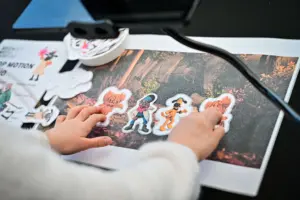
Whether children are role-playing in a cardboard box, creating adventures for toy figures, putting on puppet shows or inventing games outdoors, they are telling stories.
Play allows children to create characters, explore ideas, solve problems and experiment with language. Through play they tell, retell and reshape stories, building many of the skills that support later reading and writing.
Providing time, space and simple resources for imaginative play can be one of the most valuable investments you make in your child’s literacy development.
The Takeaway
Books are wonderful, and sharing books with children remains one of life’s great pleasures. But before children learn to read words, they learn to communicate, to listen, to imagine, to play with language and to tell stories.
So, alongside story time, make time for conversations, singing, rhyming, creating, pretending and playing – building together strong foundations for reading!
Dr Michelle Brinn, Lecturer in Early Childhood Studies at Swansea University. Supporting parents of 0-5 year-olds and early years communities, and championing the critical role reading plays in children’s early development, are key priorities for the National Year of Reading 2026. For more information visit https://goallin.org.uk.