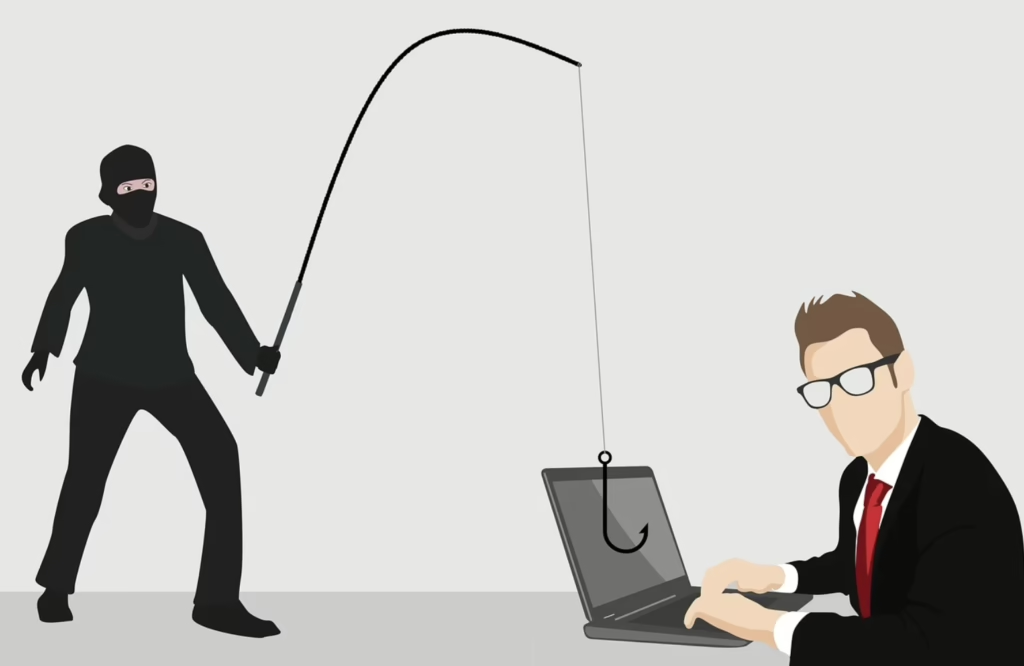
Expert shares seven simple ways to protect yourself from Facebook and Instagram scams
Daniel Damien, CEO of AI social media ad agent AdMove AI, has shared the top scams on each social media platform and how to spot them.
The most common Facebook scams of 2026
Facebook has an active user base being typically older and often more vulnerable than on some other platforms. Fraudsters have a vast pool of potential victims to target. Here are some of the most common ways they try to target you:
- Phishing scams: Emails or direct messages with sketchy links that download malware or capture login credentials on spoofed websites.
- Romance scams: Friend requests and direct messages that attempt to create a romantic connection with the goal of stealing money from the victim.
- Prizes or job offers: Claims designed to obtain personal information or money from the victim, including “You’ve won!” scams.
- Quizzes and games: Designed to trick people into revealing personal details they may use as passwords or security question answers for their online accounts.
- Charity pleas: Creating fake charities to get donations during times of disaster, using sites like GoFundMe.
The most common Instagram scams of 2026
With Instagram having over a billion monthly users, cybercriminals know how to infiltrate your account and steal your personal information. These scams include:
- Fake investment offers: Scammers promise you a great return for just a small investment.
- Bogus brand collaboration requests: Fraudsters offer to pay you for promoting their products then steal your financial data when you share your financial information.
- Selling followers and likes: Ask you to pay a nominal fee in exchange for like or follow packages, but your payment information is stolen in the process.
- Giveaways: Entice you to try and win a prize, but then you will be asked to provide personal information or payment to claim your winnings.
- Imposter brand accounts: Sell counterfeit goods (or never deliver the promised goods at all) under the guise of a popular brand to drain your bank account.
How to avoid scams on social media, according to AI experts
-
Lock down your privacy settings
If your Instagram is set to “public” by default, you’re effectively allowing anyone to see your posts and target you. To protect yourself and your privacy, set your account to “private” so only followers you approve can see your posts, make comments, and send you direct messages. On Facebook, while you can never hide your profile pictures or cover photos, you can hide almost everything else from those outside your friends list through your settings. It’s important to regularly review these settings to make sure only people you know and trust can access your profiles.
-
Use strong passwords and enable two-factor authentication
One of the easiest and simplest ways to prevent unwanted logins on your accounts is to use strong passwords and enable two-factor authentication. With this in place, anytime someone tries logging in from an unrecognised location or device, they will also have to enter a one-time code sent to your phone, in addition to your username and password.
-
Keep track of third-party apps
Over time, you have likely connected several third-party applications to your Instagram account. You should regularly review these applications to ensure no suspicious connections have been made and delete any you do not recognise or no longer use.
-
Only buy from verified profiles and brand accounts
Before buying anything through social media, take a few minutes to check the account properly. A blue tick alone is not enough to prove a brand is legitimate, as verification can now be paid for on some platforms.
Instead, look at the account’s history, follower count, previous posts, comments, tagged photos and whether it links back to the brand’s official website. Be wary of accounts offering unusually large discounts, asking for payment through unusual methods, or pressuring you to act quickly. If you are unsure, go directly to the brand’s official website rather than clicking through a social media link.
-
Search regularly for accounts in your name
To avoid the damage of someone cloning your accounts and using these fake accounts maliciously, get into the habit of regularly searching Facebook and Instagram for your name. This only takes a minute and is an easy way to identify and report imposter accounts.
-
Decline friend requests from anyone you do not know
Get in the habit of declining friend requests from anyone you are not familiar with. The more friends you have that you do not know, the higher the risk you will be approached with a scam.
-
Never click on suspicious links sent to you or respond to unsolicited messages
Whether it is a phishing email or a private message from a friend, avoid clicking on unsolicited videos or links. If you think a friend sent you something, double-check with them before clicking, especially when what they sent you involves compromising information about you or says something like, “WTF!? Is this actually you?” or “Have you seen this yet!?”.
AdMove AI. kindly supplied this information https://www.admove.ai/.