Green school spaces could help children enjoy school more, encourage curiosity and create valuable opportunities for outdoor learning, according to a landscape design expert.
Could a little more greenery make a big difference to your child’s school day? Government survey findings suggest that access to nature may play an important role in how children feel about school, with 72% of children and young people saying they enjoyed school more when there was more nature around their school.
The Children’s People and Nature Survey for England also found that 28% of children and young people said school was where they spent most of their time in nature.
With school grounds often dominated by tarmac and playground equipment, how can schools give pupils more opportunities to explore the natural world?
Arek Zakrzewski, Landscape Architect and Creative Director at North Hill Gardens, is sharing practical ideas for bringing nature into school grounds, from wildlife-friendly planting to outdoor classrooms.
Why green spaces matter for children
School gardens and green spaces can offer much more than somewhere to play at break time. They provide opportunities for physical activity, hands-on learning and discovering the natural world.
Denmark’s Udeskole approach, which involves regularly taking lessons outdoors, demonstrates how nature can become part of everyday education. Even small green spaces can provide inspiration for science, maths, English and other subjects, while encouraging children to develop their curiosity about the environment.
Spending time outdoors can also help children learn about wildlife, habitats and the importance of looking after the planet from an early age.
How schools can make more room for nature
Creating a green school environment doesn’t necessarily mean having a large garden or investing in a major redevelopment project.
Arek explains: “Ideally, green spaces in schools need to be established early in the construction of a school. It is much easier and cheaper to cover a playground in tarmac, but it offers no opportunity to create a green space where pupils can enjoy nature.”
However, existing school grounds can still be transformed with relatively simple additions, including planting beds, colourful flowers, wildflower patches, potted plants and areas designed to attract wildlife.
Choosing a variety of native plants and wildlife-friendly flowers can help create habitats for birds and insects, while making outdoor areas more interesting for children to explore.
Simple ways to make school grounds wildlife-friendly
There are plenty of ways to encourage wildlife into school grounds, even where space is limited.
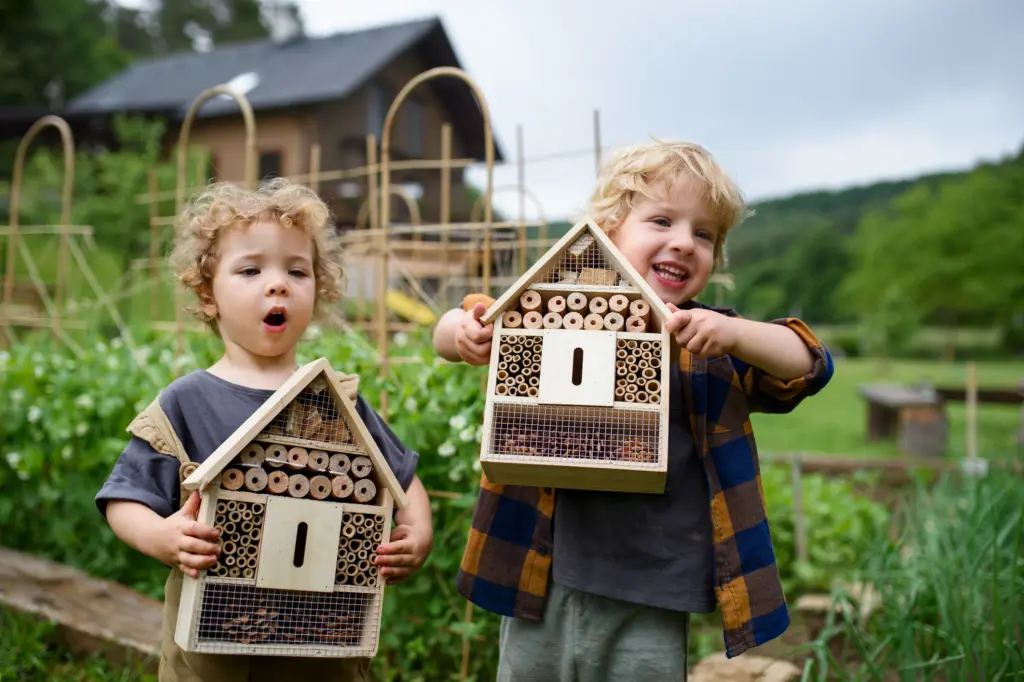
Build a bug hotel
Bug hotels provide shelter for insects and can be particularly useful in urban schools where natural habitats may be limited. Children can help build them, learning about different species while developing problem-solving and design skills.
They also offer an opportunity to observe insects and discover more about their life cycles.
Put up bird feeders
Bird feeders can introduce children to birdwatching and encourage them to notice the wildlife around them. Pupils could help refill feeders and keep a record of the birds they see visiting the school grounds.
Create a log pile
A simple pile of logs can provide shelter for insects and other small creatures. It also gives children a chance to investigate mini habitats and learn about biodiversity and the importance of providing wildlife with places to live.
These small projects can turn otherwise unused corners of a playground into places where children can explore, observe and learn.
Take lessons outside with an outdoor classroom
Green spaces can be used for much more than playtime. With a little imagination, school gardens, courtyards and raised beds can become extensions of the classroom.
Outdoor learning can bring a variety of subjects to life. Children might use their surroundings as inspiration for creative writing, explore soil and weather in geography, or observe plants and insects during science lessons. Natural materials can even be incorporated into practical maths activities.
Arek says: “The Danish approach of Udeskole can be adapted to green spaces in UK schools, regardless of the size of the area available.”
He adds: “Schools can start by creating a simple outdoor learning space with seating, planting and areas for children to explore. Even a small garden, courtyard or collection of raised beds can provide opportunities for pupils to take lessons outside and interact with nature.
“The key is to make the space versatile. Planting can be used for science lessons, natural materials can be incorporated into maths activities, while the surroundings can provide inspiration for English and art.”
This approach allows schools to make better use of the space they already have, without needing to build a dedicated outdoor classroom.
Creating outdoor spaces for every child
A well-designed school garden should offer something for all pupils, including children who may find busy playgrounds and classrooms overwhelming.
Sensory planting can help create a more varied and welcoming environment. Plants with different colours, textures, shapes and scents encourage children to explore nature through their senses, while quieter seating areas can provide somewhere to pause and enjoy the surroundings.
Accessibility is also important. Paths that accommodate different mobility needs, raised flower beds and comfortable seating can help ensure more children are able to enjoy the space.
Arek explains: “Making the space accessible for all is important, whether that means ensuring there are accessible paths, raised flower beds or quieter seated areas. It is important to think about how different pupils will use the space, rather than creating a one-size-fits-all environment.
“Green spaces should be somewhere all pupils can enjoy, learn and collaborate together.”
Small changes can make a big difference
For schools looking to bring more nature into children’s everyday lives, the good news is that they don’t need acres of land to get started.
Arek concludes: “Many school grounds are dominated by tarmac, but creating opportunities for children to connect with nature doesn’t require a major redevelopment project. Even simple additions such as sensory planting, wildlife areas, raised beds and outdoor learning spaces can help transform underused areas into valuable places for learning and exploration.
“The important thing is to make the most of the space available and think about how it can be used throughout the school day. By bringing more nature into school grounds, we can create environments that support learning, encourage curiosity and give more children the opportunity to experience the natural world.”
For parents, these ideas are a useful reminder that opportunities to connect with nature don’t have to involve expensive trips or elaborate activities. From watching birds to planting flowers and exploring a bug hotel, small everyday experiences can help children develop an interest in the world around them.
Find out more: North Hill Gardens
Source: The Children’s People and Nature Survey for England 2025 update and Children and Nature Network – Udeskole in Scandinavia.