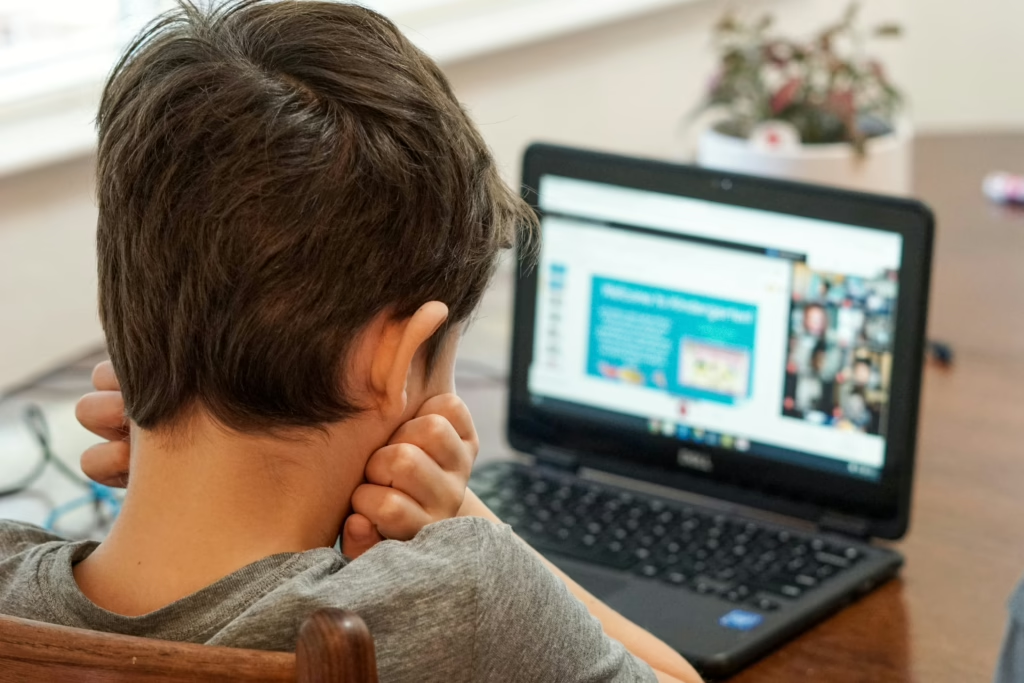
1 in 5 parents say their child has been exposed to misinformation or fake news (disinformation) online in the past year, while more than 1 in 10 say their child faced unhealthy body image pressures online, raising fresh concerns about the type of content children are coming across as screen time continues to rise.
The research, collated from a survey of 2,000 parents carried out by safeguarding experts at Virtual College [1], suggests that exposure to problematic online content is far from rare.
The findings come at a time when many families are settling back into everyday routines after Christmas, with children spending more time on new phones, tablets and laptops they received as gifts. While technology can support learning, creativity and connection, safeguarding experts warn that increased time online also brings great risks, particularly when children are navigating digital spaces that were not designed with their wellbeing in mind.
What parents say their children are being exposed to online
According to the research:
- 20% of parents said their child had been exposed to misinformation or false news online in the past 12 months
- 18% said their child had encountered encouragement to buy products through influencers or undisclosed advertising
- 13% reported exposure to content that promotes unhealthy comparisons or contributes to body image concerns
- 10% say their children were victims of cyberbullying and negative comments
These findings sit alongside wider evidence that many parents feel unsure about what their children are seeing online. A separate study has found that one in seven parents are not confident they know what their children are watching, reading or hearing when they use the internet, highlighting ongoing gaps in awareness and digital confidence.[2]
Mary-Ann Round, Safeguarding Expert at Virtual College, said the research reflects what many professionals working with children are seeing on a day-to-day basis:
“Children are seeing a huge volume of online content every day, and much of it isn’t designed with their wellbeing in mind. False news, online abuse and unrealistic expectations are becoming part of everyday online life for many young people.
“While the research reveals what parents are aware of their child being exposed to online, it’s almost certain more unhealthy exposure happens out of sight of parents, through fast-moving apps and platforms that are hard to monitor. That’s why ongoing conversations and basic safety settings are so important, especially when children are using new devices.”
Practical steps families can take
While the scale of online content can feel overwhelming for parents, Mary-Ann outlines some realistic and straightforward steps that can help reduce risks and foster better conversations at home.
Start with conversation, not control
“Children are far more likely to come to adults when something feels wrong if they’re used to talking openly about their online lives. Asking what they enjoy watching, who they follow, and what they think about the content they see helps build trust and encourages critical thinking.”
Use basic safety settings as a foundation
“Privacy controls, age-appropriate filters and screen time limits won’t solve everything, but they do provide a helpful safety net. These tools are especially important when children are using new devices or platforms for the first time.”
Help children question what they see
“Misinformation, disinformation, advertising and influencer content can be difficult even for adults to spot. Encouraging children to pause, question where information comes from, and talk through anything confusing or upsetting helps them develop the skills they need to navigate online spaces more confidently.”
Why schools can’t tackle this alone
These findings come shortly after the government announced a £20m package to introduce misogyny training in schools.[3] While the move has been welcomed by many in the education and safeguarding sectors, experts have warned that schools cannot be expected to address the issues that are being shaped and reinforced online alone.
Mary-Ann added that online misinformation, influencer culture and misogynistic content are increasingly intertwined, and can have a lasting impact on children’s attitudes, relationships and sense of identity.
She said: “Online misogyny, amplified by algorithms and influencers, is having a profound impact on children’s wellbeing, relationships and sense of identity. Schools cannot tackle this alone. Education, policy, technology companies, families and wider society must work together to challenge harmful narratives and promote positive, respectful role models for boys and young men.
“Education is one of our most powerful tools for change. When staff are confident, informed and supported to challenge misogyny early, we are not just responding to behaviour – we are actively safeguarding children and helping to build a culture where respect, equality and safety are the norm.
“But as the research shows, there are a plethora of issues with early online exposure that need to be tackled, including equipping children with the ability to question potential misinformation and hoaxes and deal with negative implications of unhealthy comparisons. Introducing online media literacy as a compulsory element of the school curriculum is a vital starting point in mitigating risks, alongside placing greater emphasis on unhealthy online comparisons within existing compulsory mental health education.”
New research highlights the growing volume of misleading and harmful content reaching children