
The heartlands of the British Isles rarely announce themselves with spectacle. They reveal their character gradually, through routine rather than display. Rivers curve quietly through towns shaped by learning, debate, and long-established habits. Streets feel familiar even on first encounter, as though they have been rehearsed for centuries. What stands out is not drama, but continuity — the sense that daily life has learned how to coexist with its own history.
Moving between England and Ireland, you notice how tradition settles into different forms. Scholarship shapes one landscape. River valleys shape another. Both rely on repetition rather than reinvention, allowing meaning to accumulate without being forced.
Oxford and the Habit of Study
Oxford carries knowledge lightly. Colleges sit close together, their stone surfaces worn smooth by time and use. Paths lead inward rather than outward, encouraging walking without urgency.
In Oxford, learning feels embedded rather than elevated. Libraries remain active. Courtyards hold quiet movement. Bells mark time without demanding attention. Scholarship here does not interrupt daily life — it organises it.
The city feels composed through routine.
Rivers That Shape Attention
The Thames moves slowly through Oxford, barely asserting itself. It frames space without dominating it. People walk alongside it without treating it as a destination.
The river’s presence encourages pause rather than gathering. Movement softens near its edge. Conversation lowers. You notice how often water in these regions functions as background rather than feature.
The landscape supports thought by remaining unobtrusive.
Continuity Along Familiar Routes
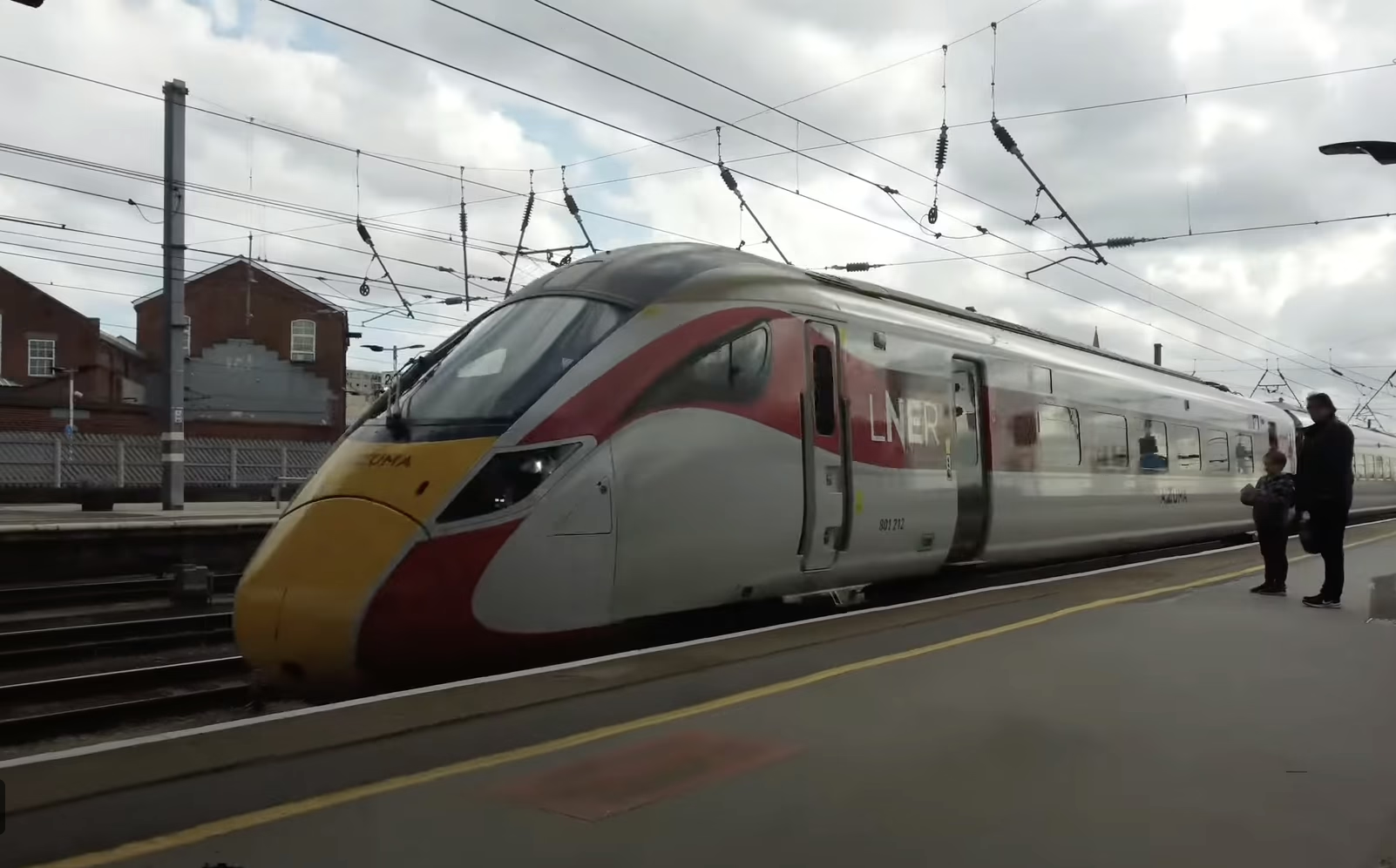
Leaving Oxford does not feel decisive. The Oxford to London train extends the same measured rhythm forward, compressing distance without altering tone. Fields and towns pass quietly, reinforcing the sense that movement here exists to connect rather than to impress.
Arrival feels expected rather than marked.
London’s Reach Beyond Its Centre
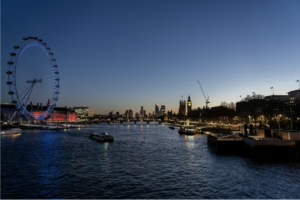
London’s influence stretches far beyond its core. Even at its edges, the city’s presence is felt through pace and density rather than skyline.
In London, tradition operates alongside momentum. Old institutions remain active. New layers settle in without displacing what came before. The city absorbs change by continuing to function.
History remains present because it is still useful.
Crossing Water Without Disruption
Moving from Britain to Ireland shifts atmosphere more than structure. Distance softens. Light behaves differently. Space opens.
Travel across the Irish Sea rarely feels like crossing a boundary. It feels like easing into a variation — familiar enough to recognise, distinct enough to notice later.
Adjustment happens quietly.
Dublin and Everyday Inheritance
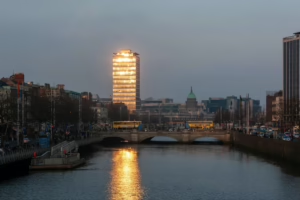
Dublin carries its cultural weight without formality. Streets remain lived-in. Buildings show wear without apology. Conversation fills public space easily.
In Dublin, history appears through use rather than preservation. Institutions remain active. Literature, debate, and memory circulate naturally, woven into routine rather than set apart.
The city feels expressive without being performative.
Southward Through Open Country
Travel away from Dublin shifts perspective. Density fades. Fields widen. Towns appear with more space between them.
Taking the Dublin to Cork trains stretches this transition smoothly. Movement remains steady. Conversation lowers. Arrival feels gradual.
The journey absorbs attention without demanding it.
Cork and the Ease of Scale
In Cork, the city feels compact and conversational. The river curves through its centre, shaping movement and orientation.
Cork’s pace feels unforced. Streets invite lingering. Public space remains accessible rather than monumental. The city holds its identity without tightening around it.
Scale feels comfortable.
Rivers That Shape Irish Settlements
Across Ireland, rivers rarely dominate the landscape, yet they quietly determine how communities form. Towns settle along their curves rather than against them. Movement follows water without needing to announce why. Bridges appear where crossing makes sense, not where symmetry demands it. Further south and west, river valleys open space rather than constrain it, keeping surroundings green and loosely arranged. These waterways organise daily life gently, guiding settlement and pace without asking to be noticed.
Green Regions That Resist Hurry
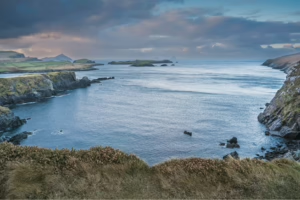
Across Ireland’s river regions, landscape resists urgency. Roads curve. Fields stretch. Movement adapts to terrain rather than correcting it.
This gentler pace shapes daily habits. Time feels flexible. Distance feels negotiable.
The land encourages attention without insisting on it.
Learning Through Presence, Not Explanation
Understanding these heartlands does not come from instruction. It comes from repetition — walking familiar routes, noticing how space responds at different hours, sensing when movement slows naturally.
Tradition remains active because it is practiced daily, not because it is preserved deliberately.
The lesson arrives indirectly.
What Persists Beyond the Journey
Later, what lingers is not a sequence of cities, but a shared rhythm — rivers shaping towns, learning shaping space, movement continuing without urgency.
Across the British Isles’ heartlands, tradition does not demand recognition. It persists quietly, shaping places that feel grounded, habitual, and open-ended.
The experience remains unfinished — steady, green, and ongoing — long after you have moved on.