Central Europe often looks simple on a map. Three capitals, neat distances, tidy connections. In reality, travelling through Prague, Vienna, and Budapest — especially as a family — feels anything but linear. Days stretch or shrink. Plans soften. Curiosity sometimes replaces structure.
That looseness is not noticed immediately. It usually appears somewhere between a missed turn, a long lunch, or a walk that goes further than intended. And for many parents, that’s when travel begins to feel manageable rather than demanding.
This route works not because it promises efficiency, but because it allows space for adjustment.
Starting Without Pressure in Prague
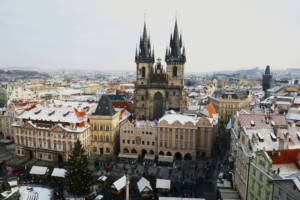
Prague rarely insists on attention. It waits for it. Streets bend, views appear unexpectedly, and even familiar landmarks feel slightly off-centre, as if the city prefers wandering to arrival.
For children, this unpredictability often feels playful rather than confusing. Towers become reference points. Bridges feel like achievements. Courtyards turn into resting places without being labelled as such.
Parents often notice something else: how easy it is to stop. A bench appears when energy dips. A café doesn’t mind if you stay longer than planned. There’s little sense of being rushed along.
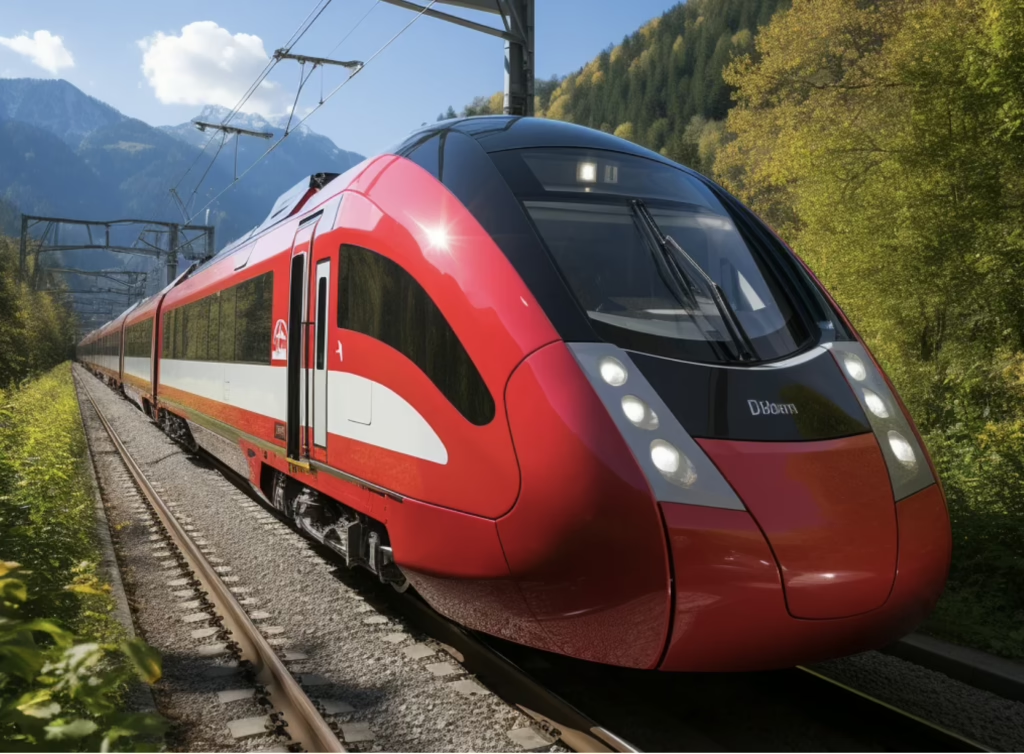
Moving on is surprisingly gentle. Taking the Prague to Vienna train becomes a pause rather than a transition — a stretch of time where no decisions are required, and watching the scenery is enough.
Vienna, Where Things Fall Into Place
Vienna introduces structure without announcing it. Streets widen. Movement becomes predictable. The city feels organised in a way that subtly lowers tension.
For families, this order can be comforting. There’s less negotiation, fewer surprises, and more space to let routines form naturally. Parks interrupt days at the right moment. Museums don’t overwhelm. Even short walks feel complete rather than fragmented.
Vienna is often where parents realise they’re no longer “managing” the trip. The city supports the pace instead of resisting it.
Between Cities, Something Shifts
One of the quieter strengths of Central Europe is how travel fits into daily life. Stations don’t feel like obstacles. Journeys aren’t tests of patience.
Using Prague to Budapest trains allows the experience to unfold gradually. Children notice changes before adults explain them — different sounds, flatter land, longer stretches of stillness. The movement itself becomes part of the memory.
There’s a sense of progression without urgency, which is rare in family travel.
Budapest, in Its Own Time
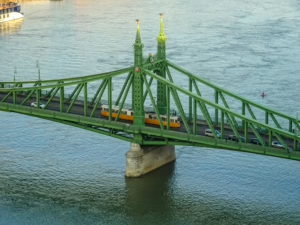
Budapest doesn’t settle immediately. It reveals itself in pieces. A hill here. A broad avenue there. A bridge that feels more important than expected.
For families, this fragmentation works. There’s no single centre demanding attention. Some days involve walking more. Others involve stopping earlier than planned. Both feel acceptable.
Children often respond to Budapest’s scale — the way the city opens outward rather than upward. Parents, meanwhile, tend to slow down here without quite deciding to. Longer meals happen. Evenings arrive gently.

When Learning Isn’t the Goal
Somewhere along this route, learning starts to happen quietly. Not through explanation, but through repetition and contrast.
Children notice that cities behave differently. Those streets feel wider in one place, tighter in another. That food arrives differently. That people linger or move on. These observations don’t announce themselves as lessons — they simply accumulate.
Parents often realise later how much has been absorbed, once everyone is home again.
Meals as Anchors, Not Events
Food becomes less about discovery and more about grounding. Familiar enough to feel safe, varied enough to stay interesting.
Meals create natural breaks in the day. They reset energy without interrupting momentum. For families, these pauses matter more than perfectly timed sightseeing.
What’s remembered is rarely the dish itself, but the moment it allowed everyone to stop.
Letting the Cities Set the Pace
Trying to experience Prague, Vienna, and Budapest in the same way rarely works. Each city resists uniform treatment.
Prague rewards wandering. Vienna supports routine. Budapest invites lingering. Accepting this difference changes how the trip feels. Days become less about balance and more about responsiveness.
Parents who allow flexibility often find the journey feels longer — in a good way.
Why This Route Endures
This trip stays with families not because it dazzles constantly, but because it accommodates real rhythms. Energy rises and falls. Interest shifts. Plans adjust.
Central Europe doesn’t punish that unpredictability. It absorbs it.
And somewhere between the train rides, the pauses, and the unplanned afternoons, the journey becomes less about where you went — and more about how it felt to be there together.