
At half term, thousands of drivers will be preparing for longer motorway journeys and weekend trips. However, driving experts are warning parents not to ignore one dashboard warning light that could lead to breakdowns and costly repairs.
Keith Hawes, Director at Nationwide Vehicle Contracts, says tyres are among the most commonly overlooked safety checks before setting off, and drivers should carry out six simple checks that take less than two minutes.
“I’m a driving expert and parents are warned NOT to ignore this dashboard light before half-term road trips”
- Families heading on a journeys urged to check tyres before setting off
- Ignoring ONE dashboard warning light could lead to costly damage
Thousands of UK families are prepare for longer car journeys, weekend trips, and motorway travel. While many drivers remember to check fuel levels and routes, experts warn that tyres are among the most commonly overlooked safety checks before setting off.
Tyres are the only point of contact between a vehicle and the road, yet small issues such as incorrect pressure or hidden damage can significantly affect braking distance, steering control, and lead to expensive repairs if left unchecked.
Keith Hawes, Director of Nationwide Vehicle Contracts, shares six simple checks to do that take less than two minutes.
-
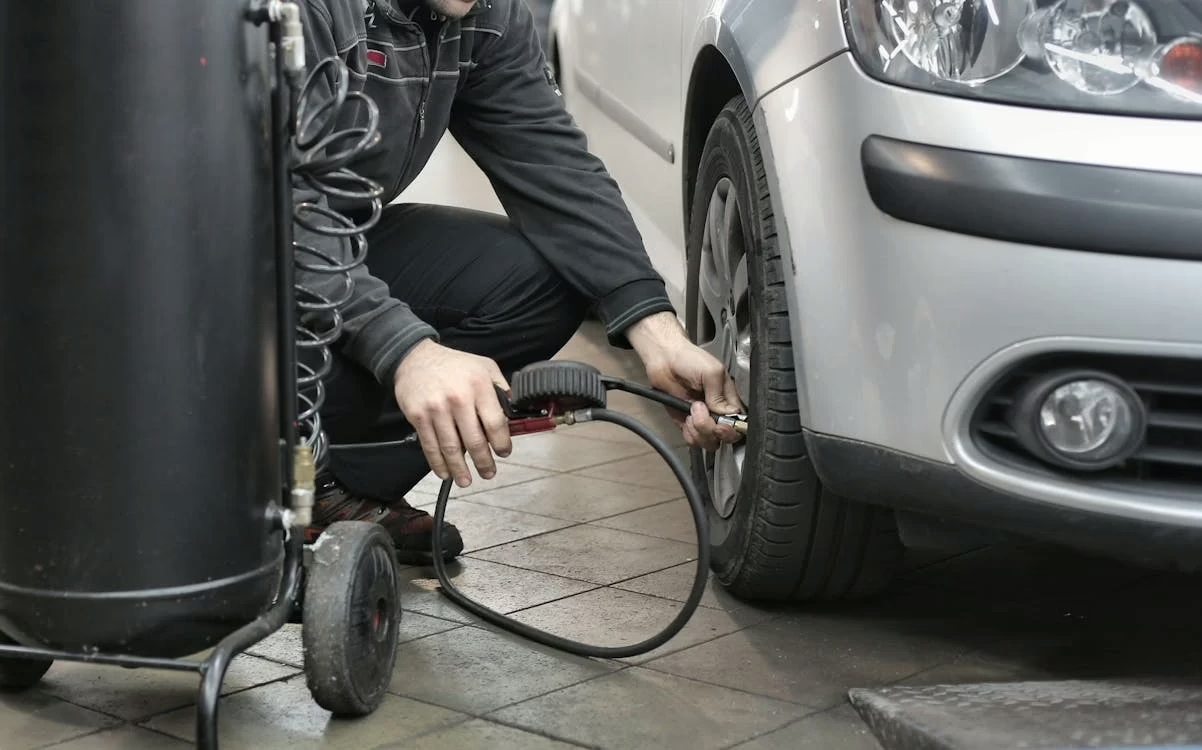
Check for underinflated tyres Under-inflated tyres create greater rolling resistance, forcing the engine to work harder and increasing fuel usage. Even a small drop below the recommended PSI can have a noticeable impact. Tyres will also wear faster and more unevenly, leading to avoidable replacement costs.
-
Use a 20p coin to check tread dept Insert a 20p coin into the main tread grooves of the tyre. If the coin’s outer band is fully hidden, the tread depth is generally above the legal limit. If the band is visible, the tyre may be too worn and should be checked professionally. Worn tread reduces grip on wet roads and increases stopping distances.
-
Check the correct PSI inside your car Many drivers look at the tyre itself, but the recommended pressure is usually printed inside the driver-side door frame,fuel cap flap, or in the vehicle’s handbook. This takes seconds to find and prevents guesswork. Using the wrong PSI can affect both safety and fuel efficiency.
-
Don’t ignore dashboard warnings Modern tyre pressure monitoring systems are designed to alert drivers early and rarely activate without cause. If the warning light appears, pressures should be checked as soon as it is safe to do so. A slow puncture is a common trigger, and continuing to drive can result in irreversible tyre damage or total failure.
-
Do a quick walk-around visual check Before loading the car, spend 30 seconds walking around the vehicle. Look for bulges, cracks, or objects such as nails or screws in the tread. Damage often happens after hitting potholes or kerbs and can go unnoticed during everyday driving.
-
Look at the sidewalls, not just the tread Drivers often focus only on tread depth, but sidewall damage is a common cause of blowouts. Small bubbles, cuts, or deep cracks in the sidewall can weaken the tyre structure and should be checked before motorway driving.
Hawes adds:
“Half-term journeys often involve heavier loads, longer distances, and higher speeds. Spending just a couple of minutes checking tyre pressure and visible condition before putting your family in the car is one of the simplest safety steps drivers can take, and it can also help avoid unnecessary running costs.”
For more driving advice, visit: https://www.nationwidevehiclecontracts.co.uk/blog