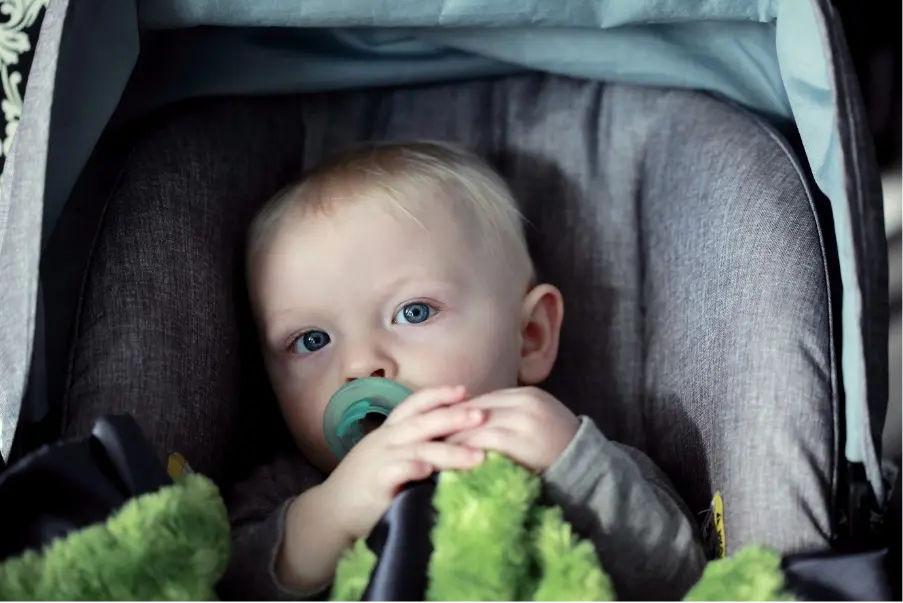
More than half of UK parents have never cleaned their child’s car seat, according to a new survey from car leasing company Leasing Options. A staggering 57% of parents admitted they have never given the seat a clean, and a microbiologist is warning that the grime could be a real health risk for little ones.
It’s the seat that carries your most precious cargo, yet it’s the part of the car so many of us forget about.
Only 17% of parents say they clean the car seat at least once a week, while just 18% manage it once a month. For everyone else, the car seat is very much a “set it and forget it” job.
What’s lurking in the family car
When parents and grandparents do finally turn their attention to the car’s interior, the survey found they are met with:
- Crumbs throughout the car (21%)
- Empty food packaging left behind (18%)
- Dog hair (7%)
- Even the odd insect (1%), rotten fruit (1%) and lingering bad smells (1%)
Add in the fact that just over half of owners (54%) only give the whole car a once-a-month clean, and it paints a picture of family cars that are far grubbier than most of us would like to admit.
Why a dirty car seat is a health risk
Microbiologist Jason Tetro, widely known as the ‘Germ Guy’, warns that the combination of food, warmth and fabric makes children’s car seats “a perfect storm” for microbial growth.
He explains that spills rich in protein and sugar are the highest risk, with dairy the worst offender. “Milk and formula are pasteurised, not sterilised, so bacteria are still present. Within a couple of days, you’ll notice a stale smell, and after that it gets much worse. Sugary drinks are also beloved by bacteria.”
The warm, enclosed environment of a car speeds things up. “Bacteria, viruses and mould can all grow at 15 degrees, but they love higher temperatures and adding humidity, you have the perfect recipe for rapid growth.” Under warm conditions, bacteria can double every 20 minutes, meaning a spill can become a hygiene concern within 24 to 48 hours.
The health implications are serious. “Dirty car seats can contribute to skin irritation, stomach bugs and even respiratory issues. Staphylococcus aureus, for example, can cause rashes and impetigo, while mould spores can trigger allergies.”
He adds that car seats are far dirtier than parents realise: “Swab testing routinely shows unwashed car seats harbour significantly higher microbial loads than phones, kitchen counters and even household toilet seats.”
In swab tests carried out by Leasing Options, one car belonging to a young family showed 32,000 colony-forming units of faecal streptococci, which can spread throughout the vehicle and then into the home. The results suggest vehicles carrying young children could benefit from more routine cleaning to reduce the risk of harmful bacteria.
How to clean your child’s car seat properly
According to Jason, reaching for the baby wipes isn’t enough. “Baby wipes clean, but they don’t disinfect. Use disinfectant wipes on hard surfaces and for fabrics, machine wash or place in hot water above 70 degrees to kill most microbes.”
Always check your car seat manufacturer’s instructions first, as some covers and straps have specific washing guidance.
Is your child’s car seat still fitted correctly?
An even bigger risk is parents not keeping on top of how their child’s car seat fits. The survey found that a third (34%) of parents check their child’s car seat or harness fitting before every long journey. Others are far more relaxed, with some admitting they have never rechecked the fitting since the first install, and others unsure of the current height and weight guidelines altogether.
Mike Thompson, Chief Operating Officer at Leasing Options, said: “A car seat is only as safe as its fit. Even a seat that was installed perfectly on day one can become unsafe within months, simply because children grow so quickly. A harness that’s too loose can allow a child to be thrown forward in a sudden stop, while straps that sit too tight or too low can fail to protect properly in a crash.”
He recommends parents run the ‘pinch test’ before every long journey. “Try to pinch the harness webbing at the shoulder; if you can pinch excess material, it’s too loose. It’s also worth checking that the harness sits at or just below shoulder height for a forward-facing seat, and at or just above for rear-facing.”
“Height and weight guidelines change too, and a seat that was right for a toddler may no longer be appropriate a year later. It only takes a couple of minutes to check, but it can make a real difference if the worst happens.”
You can find the official UK rules on which seat your child needs on the GOV.UK child car seat guidance page.